Education Program Vertical Banner: A Strategic Asset for Visual Communication
In the competitive landscape of educational marketing and institutional promotion, visual clarity is not merely an aesthetic preference; it is a functional necessity. The Education Program Vertical Banner serves as a critical touchpoint between an institution and its prospective audience. Whether deployed at a university open day, a corporate training seminar, or a community workshop, these vertical displays must communicate value instantly. This article explores the practical implementation of high-quality vertical banner templates, focusing on how design elements, file specifications, and workflow integration contribute to successful promotional outcomes.
The Role of Vertical Layouts in Educational Marketing
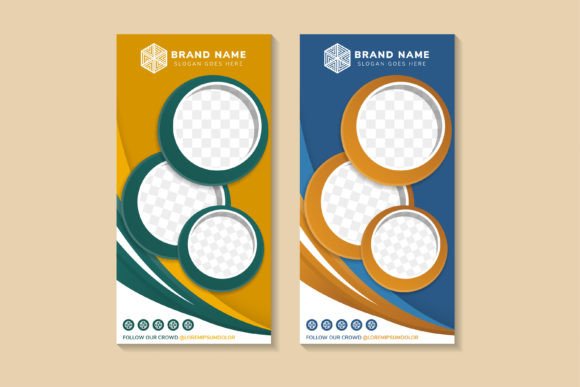
Vertical banners, often referred to as roll-up banners or standees, occupy a unique space in physical advertising. Unlike horizontal billboards or digital ads, vertical banners are designed for close-proximity engagement. They are typically placed in high-traffic areas such as lobby entrances, registration desks, or hallway corners. The primary challenge in this format is managing limited horizontal space while maintaining readability from a distance.
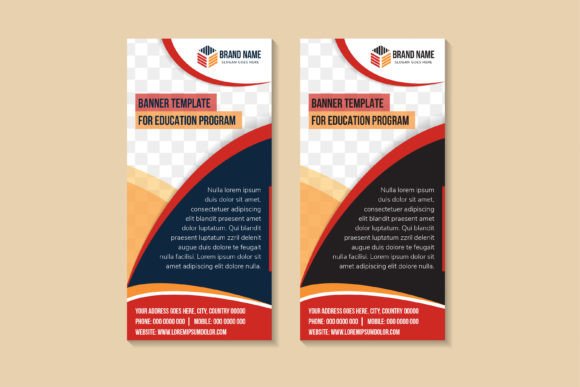
An effective Education Program Vertical Banner leverages this constraint by prioritizing hierarchical information. The headline must capture attention within seconds, followed by supporting visuals and concise text. The template described here utilizes a brown and blue background with red and yellow elements. This color strategy is not arbitrary; blue often conveys trust and professionalism, essential for educational institutions, while brown provides a grounded, stable foundation. The accent colors of red and yellow draw the eye to key calls to action or important dates, guiding the viewer’s journey through the content without overwhelming them.
Design Elements and Visual Hierarchy
The success of any promotional material depends on its ability to guide the viewer’s eye. In this specific template, the inclusion of a dedicated space for a photo collage allows educators and marketers to showcase real-world applications of their programs. Photos of students engaged in learning, faculty members in discussion, or campus facilities create an emotional connection that text alone cannot achieve. This visual evidence supports the claims made in the text, enhancing credibility.
The layout is structured to accommodate both imagery and typography seamlessly. The headline, "Education Program," is positioned prominently, ensuring immediate recognition of the subject matter. Below this, the description area provides room for essential details such as program benefits, duration, and enrollment information. The use of vector graphics ensures that all shapes, icons, and text remain crisp and legible regardless of the print size. This is particularly important for large-format printing, where pixelation can severely undermine professional perception.
Color Psychology and Brand Consistency
Consistency in branding is vital for recall. The combination of brown, blue, red, and yellow offers a versatile palette that can be adapted to various institutional identities. For instance, a technical college might emphasize the blue and brown tones to project stability and expertise, while a creative arts program might highlight the red and yellow accents to suggest energy and innovation. The editable nature of the template allows designers to tweak these hues to align perfectly with existing brand guidelines, ensuring that the banner feels like an organic extension of the institution’s visual identity rather than a generic add-on.
Technical Specifications and File Usability
For professionals involved in the production of marketing materials, the technical quality of the source file is paramount. This template is provided in high resolution at 300dpi, which is the industry standard for print quality. Printing at lower resolutions often results in blurry images and jagged edges, which can detract from the perceived quality of the educational program being advertised. By starting with a 300dpi file, designers ensure that the final printed product meets professional standards.
Furthermore, the fact that all graphics are 100% vector is a significant advantage. Vector files, such as AI, EPS, and SVG, use mathematical equations to define shapes rather than pixels. This means they can be scaled infinitely without any loss of quality. Whether the banner needs to be resized for a smaller tabletop display or a larger outdoor stand, the integrity of the design remains intact. This flexibility reduces the need for multiple design versions, streamlining the workflow for marketing teams.
The download package includes AI, EPS, JPG, and SVG formats, catering to different software preferences and usage scenarios. Adobe Illustrator (AI) and Encapsulated PostScript (EPS) files are ideal for further editing and professional printing, while JPGs can be used for quick previews or digital sharing. SVG files are particularly useful for web integration, allowing the same design elements to be used on digital platforms without compromising load times or clarity.
Integrating the Template into Your Workflow
Implementing this Education Program Vertical Banner into your marketing workflow involves several stages, from preparation to final production. Understanding how this asset fits into the broader process can save time and reduce errors.
- Preparation: Before opening the template, gather all necessary content. This includes high-resolution photos for the collage, finalized text for the description, and any specific branding assets like logos. Having these elements ready ensures a smooth editing process.
- Customization: Open the AI or EPS file in your preferred vector editing software. Replace the placeholder text with your program details, ensuring that the font sizes remain readable. Adjust the photo collage by importing your selected images and masking them into the designated frames. Use the layer organization features to keep your workspace clean and manageable.
- Color Adjustment: If your institution’s brand colors differ from the default brown and blue scheme, use the global color swatches to update the entire design simultaneously. This feature ensures consistency across all elements and saves time compared to changing colors individually.
- Proofing: Once the design is complete, export a proof PDF or JPG for review. Check for spelling errors, alignment issues, and color accuracy. It is often helpful to view the design at actual size on screen to gauge readability.
- Production: Send the final AI or EPS file to your printer. Specify the material type, such as vinyl or fabric, and confirm the finishing options, such as grommets or hemming. Ensure the printer is aware of the 300dpi resolution requirement to maintain quality.
Versatility Across Educational Contexts
The utility of this vertical banner template extends beyond traditional academic settings. It is equally effective for corporate training programs, vocational workshops, and online course promotions. For corporate entities, the professional layout lends credibility to internal development initiatives or external client seminars. The clear separation of headline and body text allows for concise communication of learning objectives and outcomes.
In the context of events, such as education fairs or career expos, the banner serves as a beacon for attendees. Its vertical orientation makes it visible above crowds, drawing attention from a distance. The inclusion of contact information or QR codes in the lower section can facilitate immediate engagement, allowing interested parties to scan for more details or register on the spot. This integration of physical and digital elements enhances the overall effectiveness of the marketing effort.
Long-Term Value and Reusability
One of the often-overlooked benefits of using a well-organized, editable template is its long-term value. Unlike static designs that serve a single purpose, this template can be reused for multiple programs or events. By simply swapping out the text and images, marketers can create a cohesive series of banners for different departments or semesters. This reusability not only reduces design costs but also strengthens brand recognition through consistent visual language.
Moreover, the vector format ensures that the template remains relevant even as design trends evolve. Designers can easily update fonts, adjust layouts, or introduce new graphic elements without starting from scratch. This adaptability makes it a sustainable choice for institutions looking to maintain a modern and professional appearance over time.
Conclusion
The Education Program Vertical Banner is more than just a printed sign; it is a strategic tool for communication. By combining thoughtful design principles with high-quality technical specifications, this template empowers educators and marketers to create impactful visual assets. From the careful selection of colors to the flexibility of vector graphics, every element is designed to support clear and effective messaging. Integrating this resource into your workflow allows for efficient production, consistent branding, and versatile application across various educational contexts. Ultimately, the goal is to connect with your audience, and a well-executed vertical banner is a powerful step toward achieving that connection.
Thank you for choosing my store. I wish you a good day. Please contact me if you have any questions.